
Overview
What is the Mulch Calculator?
A mulch calculator is a coverage estimator for bark, wood chips, rubber, compost, and decorative surface mulches. You describe the geometry of the planting bed, set depth, choose a mulch type (or a custom density), pick a bag size, and optionally add waste and price. The tool returns volume, bag counts, approximate weight, and coverage area. It does not choose plant species, fire ratings, or playground fall-height specifications — those stay with product labels and local guidance.
Mulch orders go wrong when depth is guessed from a photo, a curved border is treated as one rectangle, or bags are counted without converting cubic feet to yards. This free mulch calculator turns flower beds, circular islands, triangles, irregular sections, tree rings, known areas, and known volumes into cubic yards and cubic metres, then estimates 1.5, 2, and 3 cubic-foot bags plus optional bulk cost so you can call a landscape yard with a number that matches the bed you are actually covering.
Workflow
How does it work?
Volume is area × depth for most modes. Rectangles use length × width. Circles use πr² from diameter. Triangles use ½ × base × height. Irregular mode sums up to three section areas you measure separately. Tree-ring mode subtracts the inner clear circle from the outer diameter so mulch stays off the trunk. Known-area and known-volume modes skip plan geometry. Waste multiplies volume by (1 + waste%/100). Bag counts divide cubic feet by your selected bag size. Weight multiplies final volume by bulk density for the mulch you selected.
Choose Imperial or Metric, then select a mulch type — or enter a custom density from your supplier ticket.
Pick Rectangle, Circle, Triangle, Irregular area, Tree ring, Known area, or Known volume.
Enter the dimensions that enclose the mulch layer (and depth unless volume is already known).
Use depth chips for common 1–4 inch or 25–100 mm layers, then set waste — often 5–10% for settling and spill.
Choose a bag size (1.5, 2, 3 ft³, or custom) and optionally add a unit price for bags or bulk.
Read yards, metres, bags, pickup loads, and weight, then copy, share, or print the result.
Math
Formula
Volume = Area × Depth × (1 + waste%)
Area depends on mode: length × width, πr², ½ × base × height, sum of irregular sections, or π(R_outer² − R_inner²) for a tree ring. Depth is the finished thickness after spreading — typically 2–3 inches for fine mulch and 3–4 inches for coarse bark. Waste covers spill, wind loss, and settlement. Bags = cubic feet ÷ bag size, rounded up. Weight = volume × bulk density. Preset densities are planning values for moderately damp mulch; wet loads weigh more. Rubber mulch is denser than bark and does not compost into soil.
Inputs
Step-by-step variables
L / W
Length and width
Plan dimensions of a rectangular flower bed, border strip, or rectangular island.
D
Diameter
Full width across a circular bed. For tree rings, use outer diameter and a smaller inner clear diameter.
A
Area
Known square footage or square metres, or the sum of irregular sections you measured separately.
d
Depth
Finished mulch thickness. Keep mulch a few inches away from trunks and stems to avoid moisture damage.
w
Waste %
Allowance for spill, settling, and uneven ground. Ten percent is a practical starting point for most beds.
ρ
Density
Bulk density used for weight estimates. Bark is light; rubber and wet compost weigh more per cubic yard.
Practice
Step-by-step examples
Rectangular shrub bed at 3 inches
A front bed measures 20 ft by 8 ft. You want hardwood mulch 3 inches deep with 10% waste.
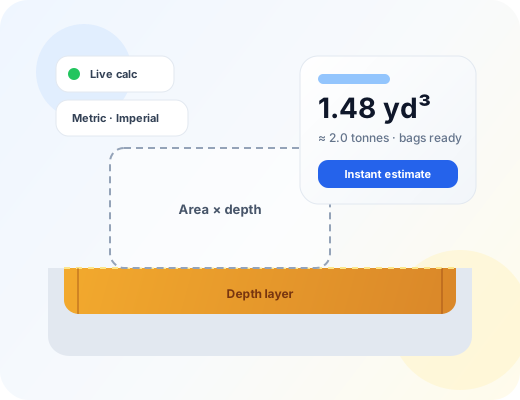
Area = 160 ft². Depth = 0.25 ft. Raw volume ≈ 40 ft³ (1.48 yd³). With 10% waste ≈ 1.63 yd³ — about 22 bags of 2 ft³ mulch.
Tree ring without burying the trunk
Outer ring 8 ft across, inner clear 2 ft, cedar mulch 2 inches deep, 5% waste.
Annulus area ≈ 47.1 ft². Volume ≈ 7.9 ft³ before waste (~0.31 yd³ with 5% waste) — typically 5 bags of 2 ft³.
On site
Real-life examples
Curved border broken into sections
A kidney-shaped bed is measured as 80 ft² + 40 ft² sections at 3 inches of pine bark.
Irregular mode sums 120 ft² × 0.25 ft = 30 ft³ (~1.11 yd³ before waste). Add waste, then choose bags or a bulk yard delivery.
Refresh instead of a full rebuild
Last year’s beds still show 1 inch of coverage; you want to top up to 3 inches over 200 ft².
Use known area with 2 inches of new depth (the difference). That is ~33 ft³ (~1.23 yd³) before waste — often cheaper as bags than a partial bulk load.
Where it helps
Use cases
- Sizing bulk bark for new flower and shrub beds
- Counting garden-centre bags for small borders
- Tree-ring mulch that stays clear of the trunk
- Rubber mulch volume for play pads and paths
- Comparing bag price versus cubic-yard delivery
- Refreshing settled mulch without re-measuring every plant
Avoid these
Common mistakes
- Piling mulch against tree trunks (volcano mulching)
- Entering depth in feet when the product is sold by the inch
- Ignoring bag size differences between 2 ft³ and 3 ft³ packs
- Ordering zero waste on windy or uneven sites
- Assuming rubber and hardwood weigh the same per yard
- Treating a curved bed as one rectangle without adding sections
Deep dive
Bag vs bulk, depth choices, and ordering tips
How much mulch do you actually need?
Start with area, not with a truck size. Measure each bed, convert depth to the same unit system, then multiply. One cubic yard covers roughly 108 square feet at three inches deep — less if you go thicker, more if you go thinner. The calculator does that conversion for mixed units so you are not dividing by 27 by hand after measuring in inches.
If the bed is irregular, do not force a single rectangle. Split the shape into two or three measurable pieces, enter them in irregular mode, and let the tool sum the coverage. That habit alone removes most over-orders on curved borders.
Choosing mulch depth
Depth is a plant decision as much as a volume decision. Too thin and weeds push through; too thick and water and air struggle to reach roots. Fine shredded mulch usually works at about two inches. Coarser bark and nuggets sit better at three to four inches because larger pieces leave more air space.
Around trees, think of a wide, shallow ring — not a tall cone against the bark. Keep a clear collar so the trunk can dry after rain. Playground and path fills may go deeper for cushioning; follow the product guidance for those surfaces rather than garden-bed defaults.
- Flower and shrub beds: commonly 2–3 inches
- Vegetable beds: 2–3 inches of clean, weed-free mulch
- Tree rings: 2–3 inches, clear of the trunk
- Paths and slopes: often 3–4 inches of chunky material
Bags versus bulk mulch
Bags win when you need a few cubic feet, limited storage, or mixed colours. Bulk wins when the volume approaches a yard or more and you can accept a delivery pile. Fourteen bags of 2 cubic feet roughly equal one cubic yard; nine bags of 3 cubic feet do the same. Price the same volume both ways before you decide — bag convenience can cost more per yard even when the sticker looks cheap.
Pickup-truck loads are a rough planning cue, not a guarantee. A midsize bed often holds about two loose yards of mulch; moisture and how high you pile the load change that number. Use the calculator’s yardage first, then talk to the yard about delivery minimums.
Material notes that change weight, not coverage
Hardwood, cedar, pine bark, and dyed mulches cover the same area at the same depth. Weight differs. Rubber mulch is denser and lasts longer without feeding the soil. Compost mulch is heavier when damp and breaks down faster, so you may top up sooner. Custom density exists for supplier tickets that disagree with planning defaults — enter the number from the load sheet when you have it.
Buying & planning
Tips
- Two to three inches suits most fine mulches; coarse nuggets often need three to four.
- Buy bags for small beds; switch to bulk when you approach a cubic yard or more.
- Leave a hand-width gap around trunks and woody stems so bark stays dry.
- Wet mulch weighs more — use density as a planning guide, not a scale ticket.
- Top up annually when colour fades or depth drops below about two inches.
- Ask the yard whether dyed mulch uses colourants suitable for vegetable beds.
Need the bigger picture? Read our calculator disclaimer and accuracy policy.